- CFA Exams
- CFA Level I Exam
- Topic 5. Equity Valuation
- Learning Module 22. Free Cash Flow Valuation
- Subject 2. Computing FCFF and FCFE from net income, EBIT, EBITDA, or CFO

CFA Practice Question
Connie's Sporting Goods (CSG) has net income of $805 million for 2011. Using information from the CSG's financial statements below, use the EBITDA approach to find what FCFF and FCFE should be for CSG. Assume the income tax rate is 30%.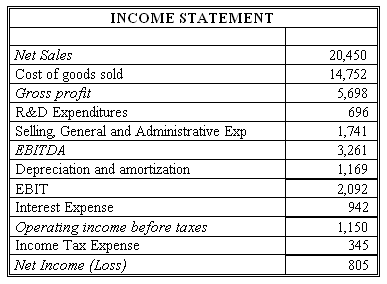
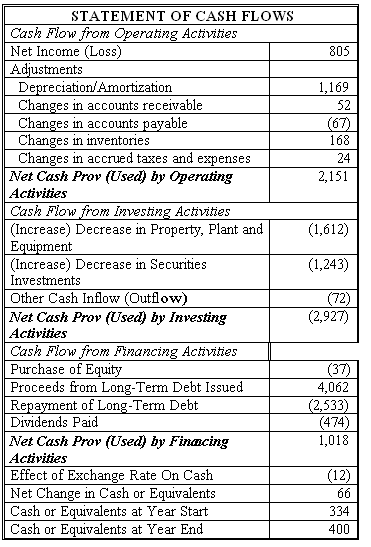
Correct Answer: FCFF = EBITDA (1 - Tax rate) + Dep (Tax rate) - FCInv - WCInv
= 3261 (1- 0.3) + 1169 x 0.3 - 1612 - (-52 + 67 - 168 - 24) = $1,198 million
= 3261 (1- 0.3) + 1169 x 0.3 - 1612 - (-52 + 67 - 168 - 24) = $1,198 million
FCFE = EBITDA (1 - Tax rate) + Dep (Tax rate) - Int (1 - Tax rate) - FCInv - WCInv + Net borrowing = 3261 (1 - 0.3) + 1169 (0.3) - 942 (1 - 0.3) - 1612 - (-52 + 67 - 168 - 24) + (4062 - 2533) = $2,068 million
User Contributed Comments 3
| User | Comment |
|---|---|
| JimM | Don't forget to add back in the Dep(Tax rate) term in this calculation. |
| alejandroc | Shouldn't FCFF incorporate the tax shield given by interest income? |
| davidt876 | alejandroc - we've been removing the tax shield from interest this whole time with Int * (1-T)... the idea is that for FCFF we want to see the cash flows before any financing decision have been made, so we don't get to benefit from the tax shield. depreciation isn't a financing decision, so when we add depreciation, we add back in its tax benefit - that is, by not removing it. so FCFF does incorporate the tax shield given by interest income.. it just removes it. |